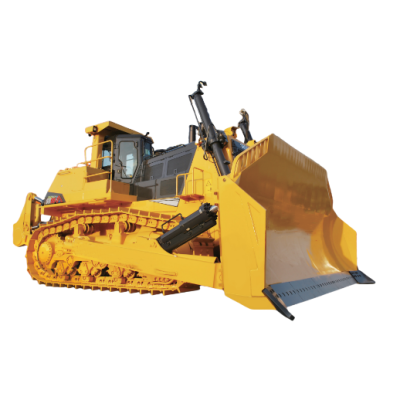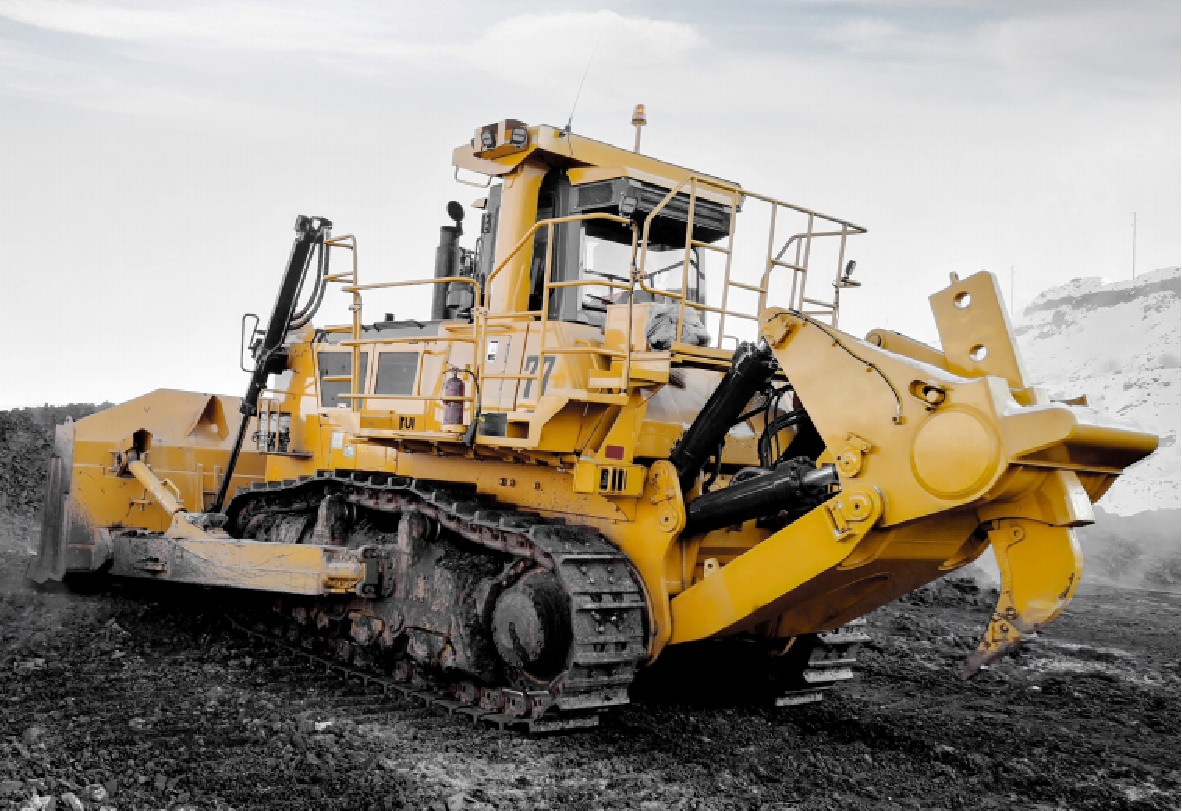
70 Ton Large Crawler Bulldozer
SD60CH bulldozer adopts a new type of black hexahedron cab with spacious internal space, good visual field, excellent anti-vibration performance and good damping cabin, which provides a comfortable working environment for drivers. Equipped with multi-function display screen, it is easy to monitor all the performance of bulldozer.
As a core equipment for heavy-duty construction scenarios, the Shanbo SD60CH bulldozer is equipped with the QSK19 electronically controlled engine, which can be called the "power core" of the entire machine. Relying on the multiple advantages of low fuel consumption, high power, high reliability, and a global service system, it provides stable and powerful power support for high-intensity operation scenarios such as mine stripping, large-scale infrastructure subgrade compaction, and heavy earthwork transportation, becoming a reliable choice for users to cope with harsh working conditions.
From the perspective of technical core, the QSK19 electronically controlled engine adopts advanced full electronic control technology and builds an intelligent power management system featuring "working condition perception - precise regulation - power output". The high-precision sensors equipped on the engine collect key operating data such as load changes, speed, water temperature, and oil pressure in real time. After transmitting the data to the core Electronic Control Unit (ECU), the ECU dynamically adjusts the fuel injection quantity and injection timing with a microsecond-level response speed. Compared with traditional mechanically controlled engines, its fuel adjustment precision is improved by several times, and it can realize "on-demand fuel supply" according to load requirements, fundamentally avoiding waste caused by excessive power. For example, during light-load operations such as site leveling, the engine can automatically identify the load intensity and reduce the fuel flow to an adaptive level, maintaining only the minimum power output required to meet the operation needs and avoiding fuel loss caused by "a large horse pulling a small cart". When entering heavy-duty dozing conditions such as mine stripping and hard rock transportation, the ECU quickly instructs the fuel system to increase the injection quantity, instantly releasing the full power of the engine to provide strong traction for the entire machine. This allows the machine to easily overcome high-resistance operation loads and ensures that the operation efficiency under heavy-duty conditions is not compromised. This intelligent power adjustment mode not only keeps the engine operating in the high-efficiency range at all times but also realizes precise control of fuel consumption. According to actual working condition tests, compared with non-electronically controlled engines of the same level, its comprehensive fuel consumption can be reduced by 8%-12%, and considerable fuel costs can be saved for users during long-term high-intensity operations.
In terms of reliability, the QSK19 electronically controlled engine enhances durability under heavy-duty conditions through structural optimization and material upgrading. The engine block is made of high-strength vermicular graphite cast iron, whose tensile strength and fatigue resistance are far superior to ordinary cast iron, enabling it to withstand high-frequency vibrations and high-pressure impacts during heavy-duty operations. The piston adopts a insert structure design, and the top is coated with a high-temperature resistant ceramic coating, which can withstand continuous scouring in a high-temperature combustion environment and avoid piston deformation due to overheating. At the same time, the engine lubrication system adopts a dual-pump oil supply design, ensuring that core moving parts such as the crankshaft and camshaft can still obtain sufficient lubricating oil film under low-speed and heavy-duty conditions, reducing abrasive wear. These design details greatly improve the Mean Time Between Failures (MTBF) of the QSK19 engine. Even in severe cold environments of -30℃ or hot summer conditions of 50℃, it can start stably and continuously output power, adapting to heavy-duty construction needs in different regions and reducing downtime losses caused by engine failures.
In addition, the QSK19 electronically controlled engine relies on a global service network to provide users with full-life cycle service support. Its service system covers major construction areas around the world, allowing users to access professional maintenance services nearby. Maintenance personnel have received professional training from the manufacturer and are familiar with engine structure and electronic control system debugging. At the same time, the manufacturer provides sufficient reserves of original accessories to ensure that accessories are delivered quickly during maintenance, shortening the waiting time for shutdown. In view of the particularity of the electronic control system, the service team is also equipped with special diagnostic equipment, which can quickly locate fault codes and accurately troubleshoot electronic control system problems, avoiding blind disassembly in traditional maintenance and improving maintenance efficiency and accuracy. This dual guarantee of "technology + service" eliminates users' worries during use and further highlights the reliability advantage of the QSK19 electronically controlled engine as a power source for heavy-duty operations.
Overal | Dimension | 9750×6750×4370 mm | ||
Operating Weight | 72550Kg | |||
ENGINE | Mode | CumminsQSK19 | ||
Rated Power | 45CKW@1800rpm | |||
TRAVEL SPEED | Gear | 1st | 2nd | 3rd |
Forward | 0~3.8 km/h | 0~6.8 km/h | 0~11.8 km/h | |
Reverse | 0~5.1 km/h | 0~9.2 km/h | 0~15.8 km/h | |
CLASSIS SYSTEM | No.of Carrier Rollers | 2 each side | ||
No.of Track Rollers | 7 each side | |||
No.of Track Shoes | 40 each sid | |||
WIdth of Track shoe | 610 mm | |||
Pitcr | 280 mn | |||
Track Gauge | 2500mm | |||
Ground Pressure | 130.2Mpa | |||
BLADE | Blade Type | Coal blade | ||
Blade Width | 6750 mm | |||
Blade Height | 2515 mm | |||
Drop Below Ground | 715 mm | |||
THREE SHANK RIPPER | Max digging depth | 14350mm | ||
Max lit above ground | 1105 mm | |||
In addition, QSK19 engine carried by Shanbo SD60CH bulldozer has undergone multi-dimensional and long-term rigorous working condition tests before it is put into the market, which has laid a solid technical foundation for its extreme environmental adaptability. These tests cover the simulation verification of all working conditions: in the high-temperature test, the engine runs continuously for a long time in an extremely hot closed test chamber, simulating the high-temperature environment of desert mining areas and tropical infrastructure sites, and its cooling system and high-temperature resistant components always keep stable operation, and there are no faults such as high-temperature deterioration of engine oil and overheating deformation of cylinder block; During the high dust test, the engine continued to work in the simulation cabin where the dust concentration was far higher than that in the conventional construction site, and the supporting enhanced air intake filtration system successfully intercepted most micron-sized dust, and there was no early damage to the piston and cylinder wall caused by abrasive wear. In the high-load cycle test, the engine runs continuously for a long time under the alternating working condition of "full load bulldozing-light load transition", and the fatigue strength and stability of the core components far exceed the industry standard. The passing of a series of rigorous tests provides authoritative verification for the actual combat reliability of the engine.
The core components of QSK19 engine also rely on high-strength material selection and precision manufacturing technology to build a solid and durable defense line. Its crankshaft is made of high-strength alloy forged steel. After professional quenching and tempering treatment and surface nitriding process, the tensile strength and fatigue resistance are greatly improved compared with ordinary crankshafts, and it can easily withstand high-frequency torque impact during heavy-duty operation. The cylinder head is made of high-quality vermicular cast iron with multi-bolt fastening structure, which can resist the knock and deformation in the cylinder under high-pressure combustion environment; Nano-scale high temperature resistant ceramic coating is sprayed on the top of the piston, which can withstand the extremely high temperature combustion chamber environment and avoid cracking of the piston due to excessive thermal load. At the same time, all the core components are machined with micron precision by CNC machining center, and the roughness of key mating surfaces is controlled within extremely high standards, which greatly reduces the friction loss between components. This series of designs allows the engine to cope with harsh working environments such as high temperature, high dust and high load. Even in the 24-hour long-term continuous operation mode in the mine, the average trouble-free running time of QSK19 engine is far longer than that of the traditional engine, and its overall reliability has greatly improved compared with that of the conventional engine, greatly reducing the construction downtime caused by power system failure.
What's more worth mentioning is that QSK19 engine relies on the global service network to provide the whole process of after-sales guarantee for users who work across regions. The service network covers all key mining areas and infrastructure hubs in China, and has set up a number of exclusive service stations and parts storage centers. When users work in domestic mining areas, they can enjoy the efficient response that service personnel arrive quickly and core parts are in place in time. In overseas markets, its service system has been extended to major infrastructure markets such as Southeast Asia, Africa and South America, and spare parts pre-warehouses have been set up in key overseas engineering areas. Even in remote overseas mines or transnational infrastructure projects, users can obtain professional maintenance services and original spare parts in a short time. This "domestic+overseas" integrated service system completely dispels the after-sales concerns of users' cross-regional operations and ensures that the equipment can maintain a sustained and stable running state in both domestic mining areas and overseas infrastructure projects.
Matching with the powerful power system, the transmission system of SD60CH bulldozer adopts hydraulic torque converter with locking function, and with high-low speed dual-drive mode, the precise balance between power output and fuel economy is realized. This locking hydraulic torque converter is built with an intelligent load sensing module, which can automatically adjust the output torque according to the change of working resistance, forming an intelligent transmission logic of "torque supply on demand": when the bulldozer encounters solid obstacles such as boulders and hard rocks in mine stripping operation, or the working load suddenly increases sharply, the torque converter will quickly increase the flow and pressure of hydraulic oil, instantly increase the output torque, provide strong traction for the whole machine, effectively avoid engine flameout caused by overload, and ensure the continuity of heavy-duty operation; When the workload is reduced, such as loose soil leveling, the torque converter will adjust the output torque accordingly, so as to avoid power waste while maintaining stable power output. This intelligent torque adjustment function does not require the operator to switch gears frequently, which not only reduces the labor intensity of the operator, but also greatly improves the ride comfort of the whole machine, so that the equipment can keep efficient adaptation under different load conditions, further strengthening the working efficiency and fuel economy of the whole machine.
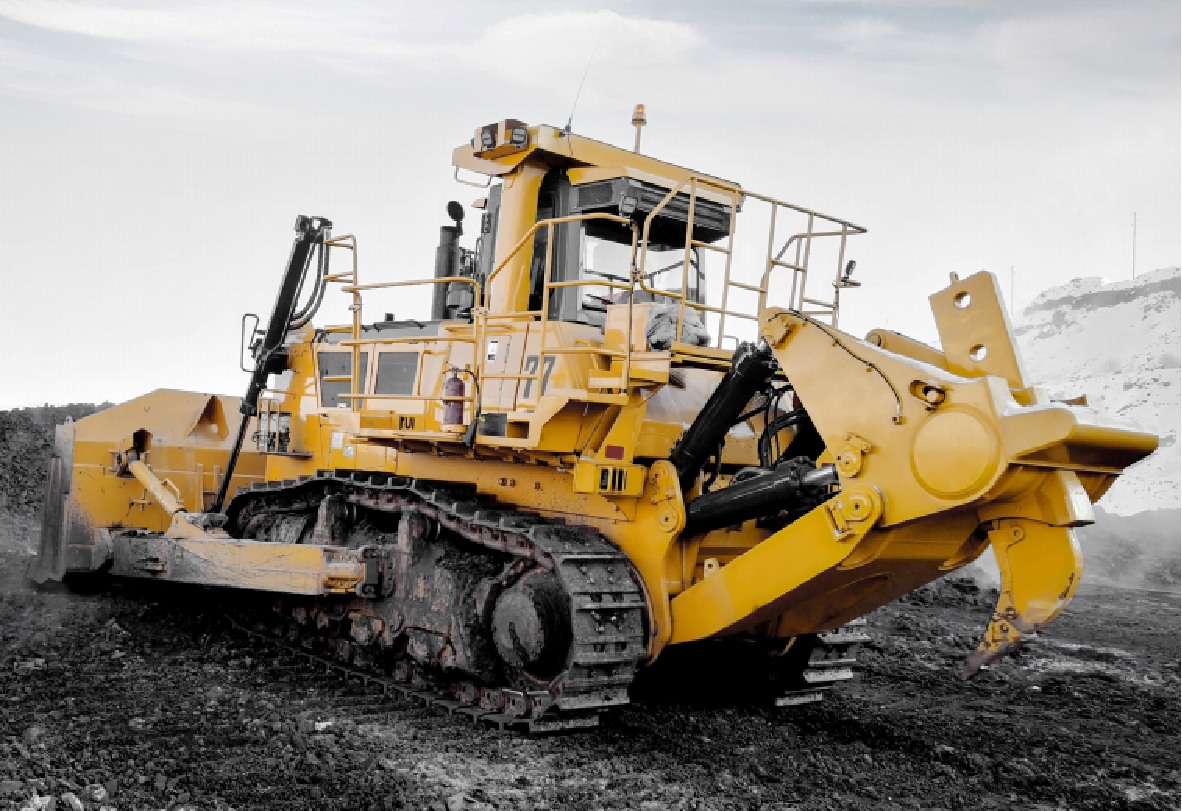
Moreover, the transmission system of SD60CH bulldozer also has the intelligent switching ability between low-speed hydraulic transmission and high-speed mechanical transmission. Through the precise adaptation of the two transmission modes, the performance of the whole machine in different scenes is further optimized. This intelligent switching function is not a simple manual mode selection, but a working condition sensing module built in the transmission system automatically judges the working requirements-the system will collect the data of the whole vehicle's driving speed, load intensity, throttle opening and so on in real time, and complete the seamless switching of transmission modes with millisecond response, without additional intervention of operators, greatly reducing the operation complexity.
The transmission system will automatically switch to hydraulic transmission mode in low-speed operation scenes, such as heavy-duty earth pushing and steep slope climbing. In this mode, hydraulic oil is used as the power transmission medium, and the compressibility and buffering characteristics of hydraulic oil are used to realize the flexible transmission of power: when the resistance of heavy-duty bulldozing surface fluctuates, hydraulic transmission can automatically absorb the load impact, avoid the power setback caused by rigid connection of traditional mechanical transmission, and keep the propulsion speed of the whole machine stable all the time, which not only improves the smoothness of bulldozing operation, but also reduces the impact damage to transmission parts such as torque converter and transmission shaft; In the process of climbing steep slopes, the advantage of stepless speed regulation of hydraulic transmission is more obvious. The output speed can be fine-tuned according to the slope angle and load change to prevent the whole machine from "sliding slope" or "jumping" and ensure the safety of steep slope operation. At the same time, the low-speed and high-torque output characteristics in the hydraulic transmission mode can provide continuous and stable traction for the whole machine, and even when climbing a hill with full load, it can avoid the lack of power of the engine due to the sudden increase of load.
When the whole machine enters a high-speed transition scene, such as long-distance movement between construction sites, the transmission system will automatically switch to mechanical transmission mode. Mechanical transmission transmits power through the rigid meshing of gear sets. Compared with hydraulic transmission, its power loss rate is greatly reduced-the power consumption caused by oil friction and pressure loss in the process of hydraulic transmission is completely avoided, so that the power output by the engine can be directly converted into the driving power of the whole machine. This efficient transmission mode can not only improve the transition speed of the whole machine, shorten the moving time between construction sites, but also reduce the energy waste in the process of power transmission: compared with a single hydraulic transmission system, the fuel consumption in mechanical transmission mode is significantly reduced, especially in long-distance transition, and the fuel consumption saving effect is more prominent.
From the perspective of long-term use, this intelligent switching design of "low-speed hydraulic stability and high-speed mechanical fuel saving" has brought double values to users: on the one hand, the buffering effect of hydraulic transmission on load impact can prolong the service life of transmission parts and reduce the maintenance frequency and cost caused by impact damage; On the other hand, the low energy consumption characteristics of high-speed mechanical transmission can save considerable fuel costs for users in long-term operation, especially for users who need to switch frequently between different construction sites, and the accumulated fuel consumption savings are very significant. Compared with the traditional single transmission system, the transmission design of SD60CH realizes the double optimization of "operation efficiency" and "use cost", so that the whole machine can always maintain an efficient and economical running state in complex operation cycles.